Why Does Strength Training Feel Impossible Right Before Your Period?
Ever wonder why your usual gym routine suddenly feels like lifting lead during your luteal phase? Science reveals how your monthly hormonal shifts impact muscle recovery.
⚡ TL;DR — the 60-second read
- •Progesterone raises your core body temperature, making workouts feel harder and increasing perceived exertion.
- •Fluid shifts and slower glycogen replenishment during the luteal phase can lengthen muscle recovery times.
- •Adjusting your intensity by swapping max lifts for moderate tempos prevents burnout and injury.
- •Eating complex carbohydrates and magnesium-rich foods supports energy and stabilises mood.
Have you ever stepped into the gym the week before your period, only to find your usual weights feel twice as heavy and your stamina has completely vanished? It is frustrating, baffling, and enough to make you want to skip your workouts entirely. But you are not losing your fitness overnight, and you certainly are not imagining things.
Research published in sports science journals suggests that the dramatic hormonal fluctuations in the latter half of your cycle fundamentally change how your body performs and recovers. Understanding these shifts can transform your fitness journey from a daily battle into a seamless partnership with your physiology. Here is the science-backed truth behind why your workouts change and how to adapt without losing your momentum.
🌡️ Why Does Your Body Temperature Spike During Your Luteal Phase?
Immediately after ovulation, your body enters the luteal phase, where progesterone takes centre stage alongside a secondary surge of oestrogen. Progesterone is a thermogenic hormone, meaning it actually raises your resting core body temperature by about half a degree Celsius. While this might not sound like much, it places an extra burden on your cardiovascular system when you exercise.
Because your core temperature is already elevated, your body has to work harder to cool itself down during strenuous movement. This leads to a higher perceived rate of exertion, making a moderate run or a familiar circuit class feel exceptionally gruelling. Accepting that your engine runs a little hotter right now helps reframe that mid-month fatigue as biology, not weakness.
💧 How Do Hormones Sabotage Your Muscle Recovery and Hydration?
That heavy, sluggish feeling in your limbs is not just in your head—it is deeply tied to fluid regulation and glycogen storage. Rising progesterone levels increase aldosterone activity, which can lead to mild cellular dehydration and sluggish glycogen replenishment in your muscles.
Furthermore, high progesterone can amplify the inflammatory response to exercise, meaning micro-tears in your muscle fibres take slightly longer to repair. If you notice your DOMS (delayed onset muscle soreness) lingering a day or two longer than usual, your shifting hormone profile is the prime suspect. Prioritising hydration, electrolytes, and anti-inflammatory whole foods during these two weeks can significantly soften the blow.
🏋️♀️ How Should You Adjust Your Strength Training Routine for Your Cycle?
Instead of fighting your physiology with rigid, punishing routines, the secret to modern longevity and fitness is intelligent adaptation. When oestrogen and progesterone peak and then plummet, your central nervous system experiences a temporary dip in explosive power and force production.
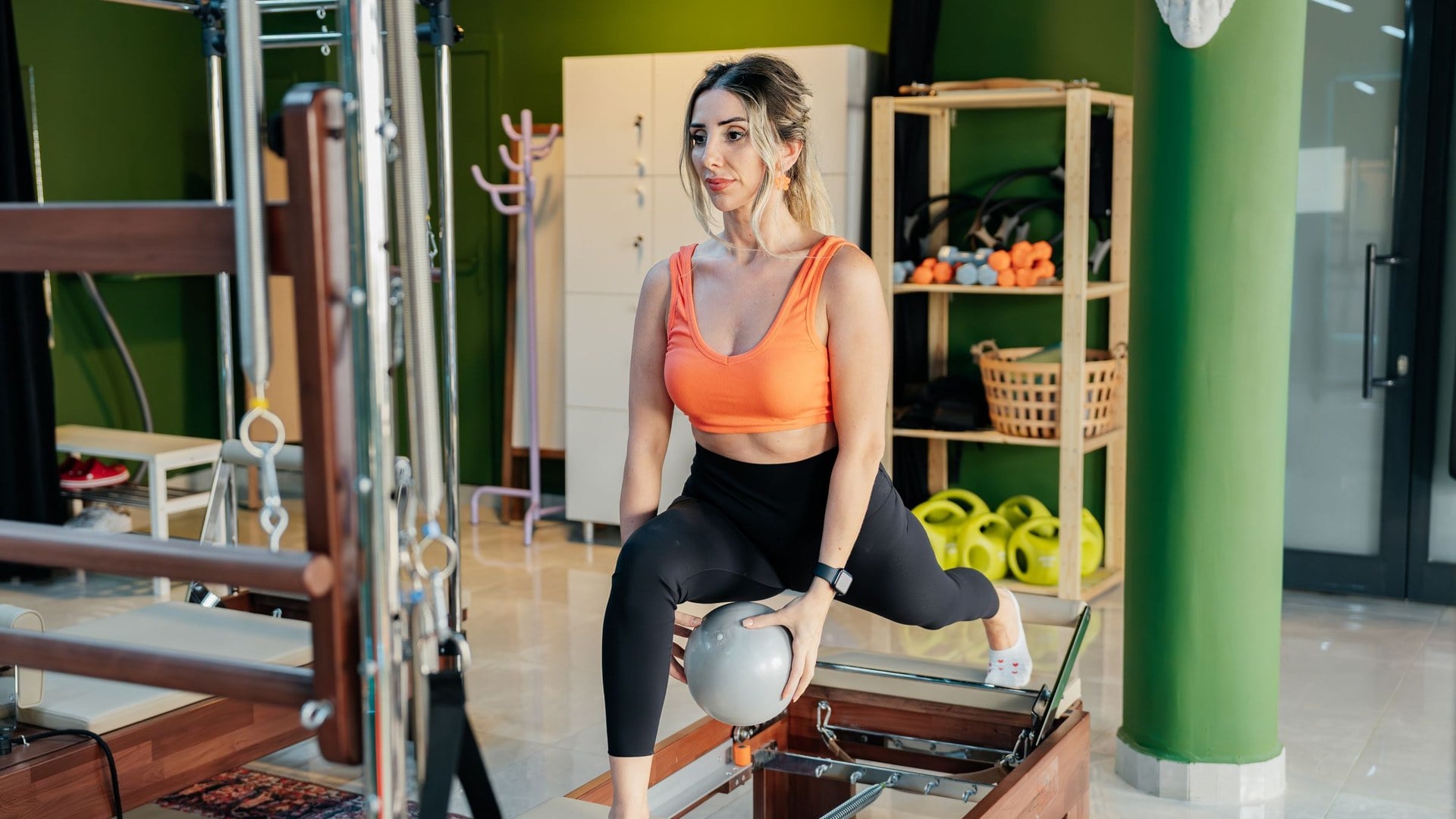
Try swapping your maximal lifts or high-intensity interval training for moderate hypertrophy work, controlled tempo training, or Pilates during the final week of your cycle. You are still building strength and staying consistent, but you are matching your output to your body's current capacity to recover. Think of it as periodising your training around your natural biological seasons rather than a strict seven-day calendar.
🥗 What Should You Eat to Fuel Your Hormones and Energy?
Nutrition plays a starring role in how resilient your body feels as progesterone dominates your system. Because your metabolic rate slightly increases in the luteal phase, you may find yourself genuinely hungrier, driven by a primal need for extra calories and complex carbohydrates.
Instead of restricting these cravings, lean into slow-release carbohydrates like sweet potatoes, oats, and quinoa, which support brain serotonin production and stabilise mood. Incorporating magnesium-rich foods such as dark chocolate, pumpkin seeds, and leafy greens can also ease muscle tension and soothe nervous system reactivity. Nourishing your body adequately during this phase prevents the dramatic blood sugar crashes that exacerbate pre-workout fatigue.
✅ Key Takeaways
- Progesterone raises your core body temperature, making workouts feel harder and increasing perceived exertion.
- Fluid shifts and slower glycogen replenishment during the luteal phase can lengthen muscle recovery times.
- Adjusting your intensity by swapping max lifts for moderate tempos prevents burnout and injury.
- Eating complex carbohydrates and magnesium-rich foods supports energy and stabilises mood.
❓ Frequently Asked Questions
Should I completely stop working out before my period?
Not at all. Movement is fantastic for easing pre-menopausal and premenstrual symptoms, but you should lower the intensity and focus on mobility or lighter weights if you feel exhausted.
Does cycle-synced training actually build muscle?
Yes. By training intensely when recovery is optimal during your follicular phase and focusing on technique and moderate loads during your luteal phase, you avoid overtraining and support long-term progress.
Why do I feel weaker even when I am eating enough?
Your central nervous system recruits muscle fibres slightly differently under the influence of high progesterone, which temporarily reduces maximal force production regardless of your calorie intake.
Ready to work with your body instead of against it? Start by swapping just one high-intensity session for a strength-focused recovery workout during your next luteal phase.
This article is for information only and is not a substitute for professional medical advice.
Found this useful? Someone you know needs it too.
Medical disclaimer: SomaDigest content is for general information only and is not a substitute for professional medical advice. Always consult your GP or a qualified healthcare professional. Read more